Too Much Information, Too Little Direction: How Supplement Overload Is Making You Worse at Taking Care of Yourself
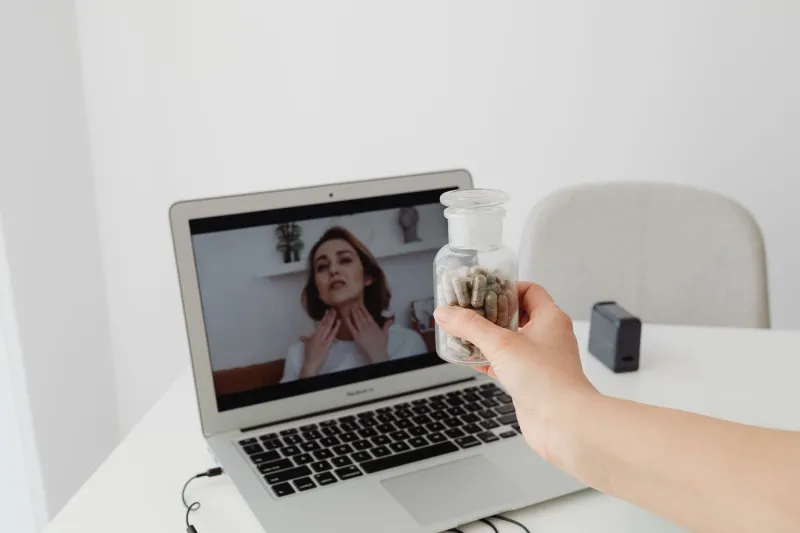
Picture this: you spend a Sunday afternoon doing "research" on magnesium supplements. Two hours later, you've got seventeen browser tabs open, three conflicting Reddit threads saved, a YouTube video from a functional medicine doctor bookmarked, and absolutely zero idea what to actually buy. You close the laptop and take some Tylenol for the headache.
Sound familiar? You're not alone — and you're not bad at this. You've just run headfirst into one of the weirder paradoxes of modern wellness culture: the more information we have access to, the harder it gets to make a confident decision.
The Paradox Nobody Talks About
For decades, the assumption was simple — give people more information, and they'll make better choices. That logic made sense before the internet turned every supplement aisle into a dissertation topic. Now, a quick search for "best omega-3" returns thousands of results, each with its own confident authority and contradictory conclusions.
Psychologists call the downstream effect of this decision fatigue — a very real cognitive phenomenon where the quality of your decisions deteriorates the more choices you have to evaluate. It's the same reason you've stood in front of a Netflix menu for 40 minutes and ended up watching something you've already seen. Your brain, faced with too many options and too little clarity, essentially taps out.
In the supplement world, decision fatigue doesn't just lead to bad choices — it often leads to no choice, or worse, choices driven by anxiety rather than actual need.
Supplement FOMO Is a Real Thing (and Someone Is Cashing In On It)
Here's where it gets a little uncomfortable. The supplement industry in the US is worth well over $50 billion annually, and a significant chunk of that revenue flows directly from confusion. When you're overwhelmed and uncertain, you become incredibly susceptible to confident-sounding voices — which is exactly what influencer marketing is designed to exploit.
Supplement FOMO — the creeping fear that you're missing out on the one thing that could fix your energy, your gut, your focus, your sleep — is baked into the content ecosystem. An Instagram reel shows a glowing 28-year-old crediting her transformation to some adaptogen blend you've never heard of. A podcast host casually mentions the nootropic stack that "changed everything." A TikTok doctor (with 2 million followers and no disclosed affiliations) warns that you're probably deficient in something you've never tested for.
None of these people are necessarily lying. But they're also not your doctor, they don't know your bloodwork, and they have a financial relationship with the products they're recommending — even when the disclosure is buried in tiny text at the bottom of a caption.
The result? A lot of people end up buying supplements not because they've identified a genuine need, but because the ambient noise of the wellness internet made them feel like they should.
Why Conflicting Studies Make Everything Worse
Even when you try to go straight to the science — good instinct, by the way — the research itself can feel like quicksand. One study says vitamin D supplementation significantly reduces inflammation. Another says it makes no meaningful difference in healthy adults. A meta-analysis tries to reconcile both and ends up with a cautiously worded conclusion that satisfies nobody.
This isn't a failure of science. It's science doing exactly what it's supposed to do — being nuanced, contextual, and constantly self-correcting. The problem is that nuance doesn't translate well to wellness headlines, which tend to flatten complex findings into bold, shareable claims.
When you're reading about supplements online, you're almost never reading the actual study. You're reading someone's interpretation of the study, filtered through their editorial angle, their platform's incentives, and whatever narrative gets the most clicks that week.
A Framework That Actually Cuts Through the Noise
Okay, so information overload is real, FOMO is being weaponized, and even the science is slippery. What are you supposed to do with all of that?
Here's a simple framework that helps a lot of people get unstuck:
Start with symptoms, not supplements. Instead of asking "what should I be taking?", ask "what do I actually want to feel differently?" Fatigue, poor sleep, joint discomfort, brain fog — these are starting points. Supplements should be answers to questions, not questions in themselves.
Anchor to your actual data. If you have recent bloodwork, use it. Genuine deficiencies (vitamin D, B12, iron, and magnesium are among the most common in the US) give you a concrete, evidence-based reason to supplement. If you don't have bloodwork, that's your first move — not a trip to the supplement store.
Apply the 72-hour rule. When something catches your attention — a recommendation, a new product, a study — wait 72 hours before acting on it. Most supplement FOMO is impulsive. A few days of distance usually clarifies whether you're responding to a real need or just ambient marketing noise.
Limit your sources deliberately. Pick two or three wellness voices you genuinely trust — ideally including at least one registered dietitian or physician — and stop adding to the pile. More input doesn't mean better decisions. It usually means the opposite.
Embrace the "good enough" mindset. The perfect supplement regimen is a myth. A consistent, evidence-supported routine that you actually stick to will always outperform the theoretically optimal stack you're still researching six months from now.
The Confidence You're Looking for Doesn't Come From More Research
This might be the hardest thing to accept in a culture that equates more information with more power: at some point, additional research stops helping and starts hurting. The goal isn't to know everything about every supplement ever studied. The goal is to make a reasonable decision based on your specific situation and then actually follow through on it.
Confidence in your supplement choices doesn't come from having read the most studies or followed the most experts. It comes from having a clear sense of your own health goals, a basic understanding of what the evidence actually supports, and the willingness to course-correct if something isn't working.
The wellness industry will keep producing content at a volume designed to keep you scrolling, second-guessing, and shopping. You don't have to keep up with all of it. In fact, your health might genuinely be better served by keeping up with less.
Close a few tabs. Pick one thing. See how it goes.
That's not giving up on being informed — that's being smart about what "informed" actually means.